Verify with Averer
The Averer Web SDK provides privacy-preserving eligibility verification for both individuals and businesses. Your users can prove they meet specific criteria (age, residency, accredited investor status, AML compliance, and more) without revealing sensitive personal data.
How verification works
- Your app defines queries: you specify the eligibility criteria users must satisfy, using the
sdkQueryprop on theAvererWebSdkcomponent. - The user authenticates: the SDK handles login via email or social accounts, creating an embedded wallet in the process.
- Credentials are issued: after identity verification (KYC or KYB), verifiable credentials are issued to the user's wallet.
- Proofs are generated: the SDK generates zero-knowledge proofs or selective disclosures against your queries.
- Results are returned: your
onSuccesscallback receives the verification result, including proof data and eligibility status.
Verification flow
- Landing screen: after initialisation of the SDK, users see the landing page.
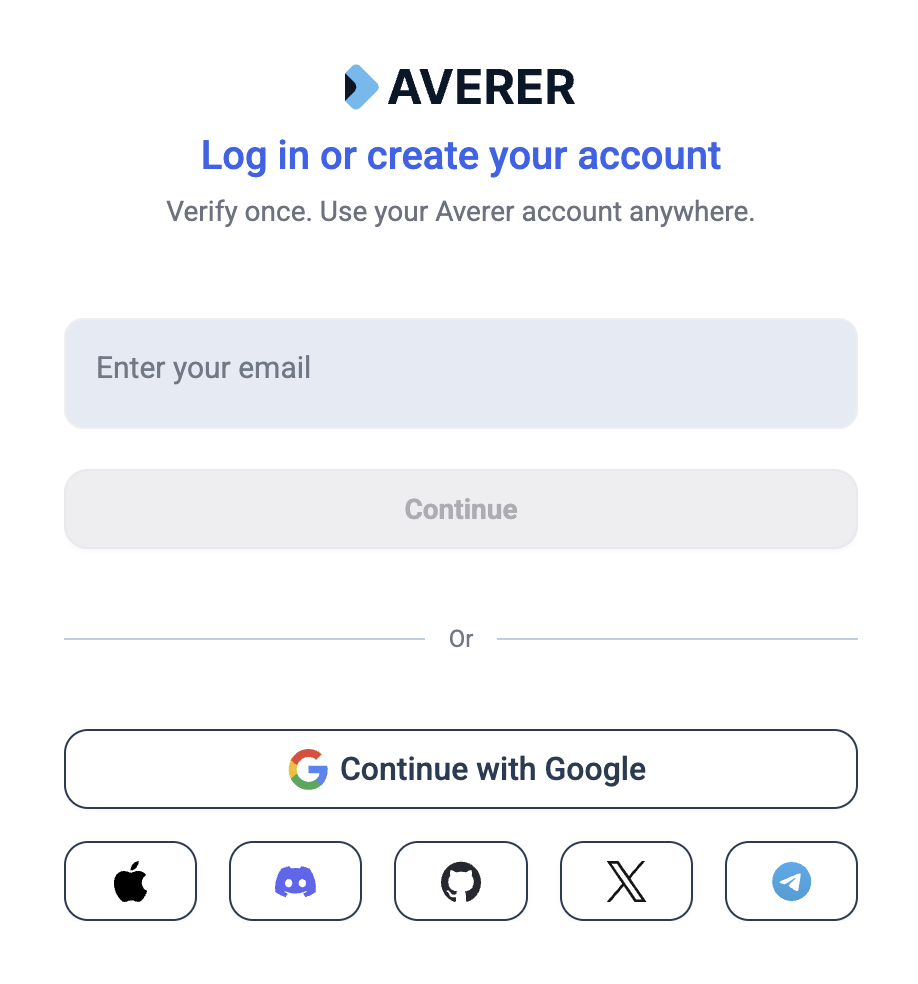
- Login/Signup: users choose their preferred social or email login method.
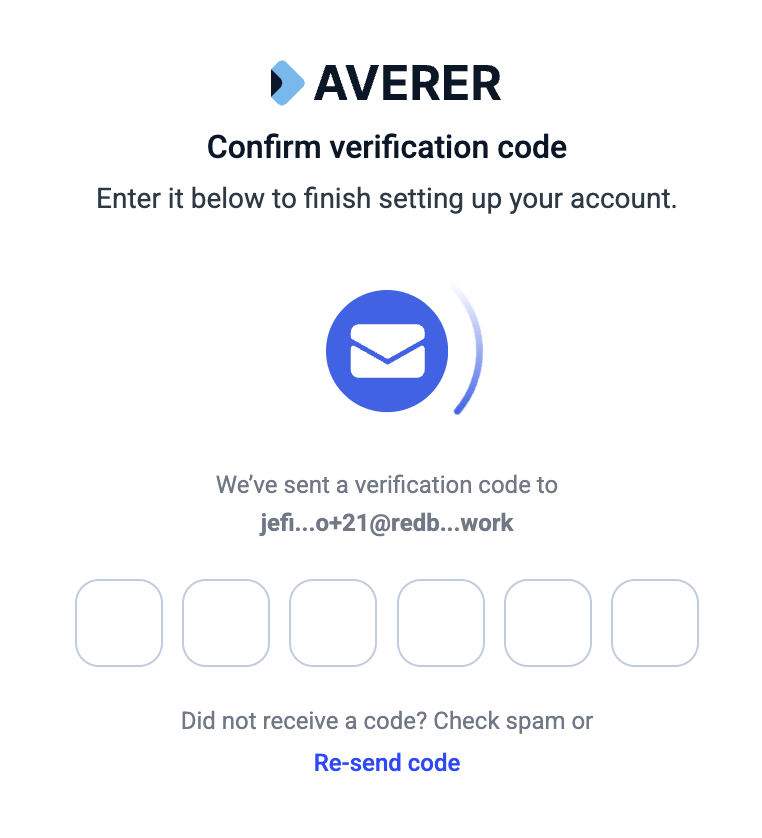
- Identity verification: the SDK captures the user's PII to enable them to get permission on-chain. Once complete, the Averer Issuer funds the user's embedded wallet and makes an on-chain call to enable the user. This step is fully abstracted from the user.
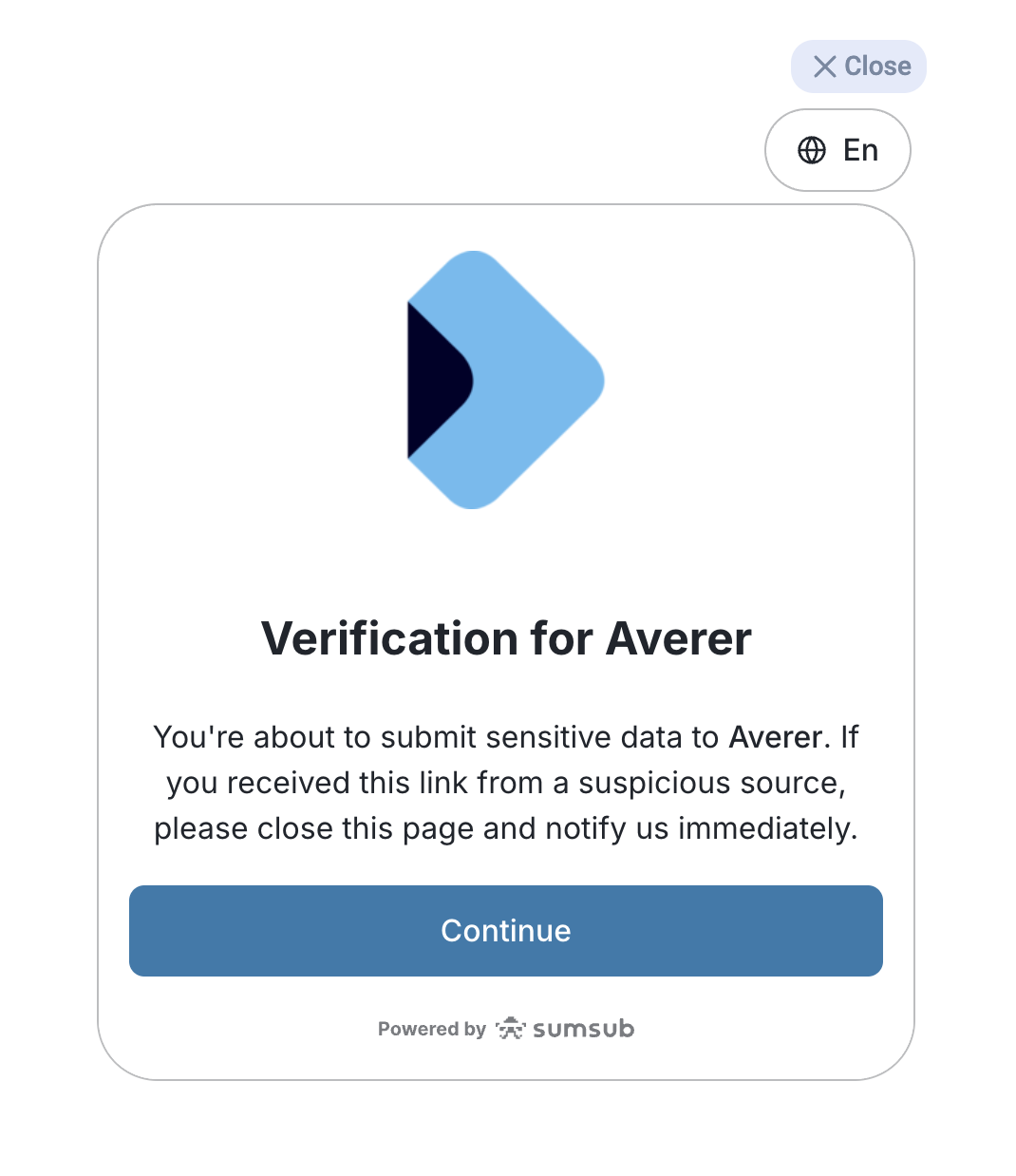
- Eligible credentials: the user is shown the credentials they are eligible for.
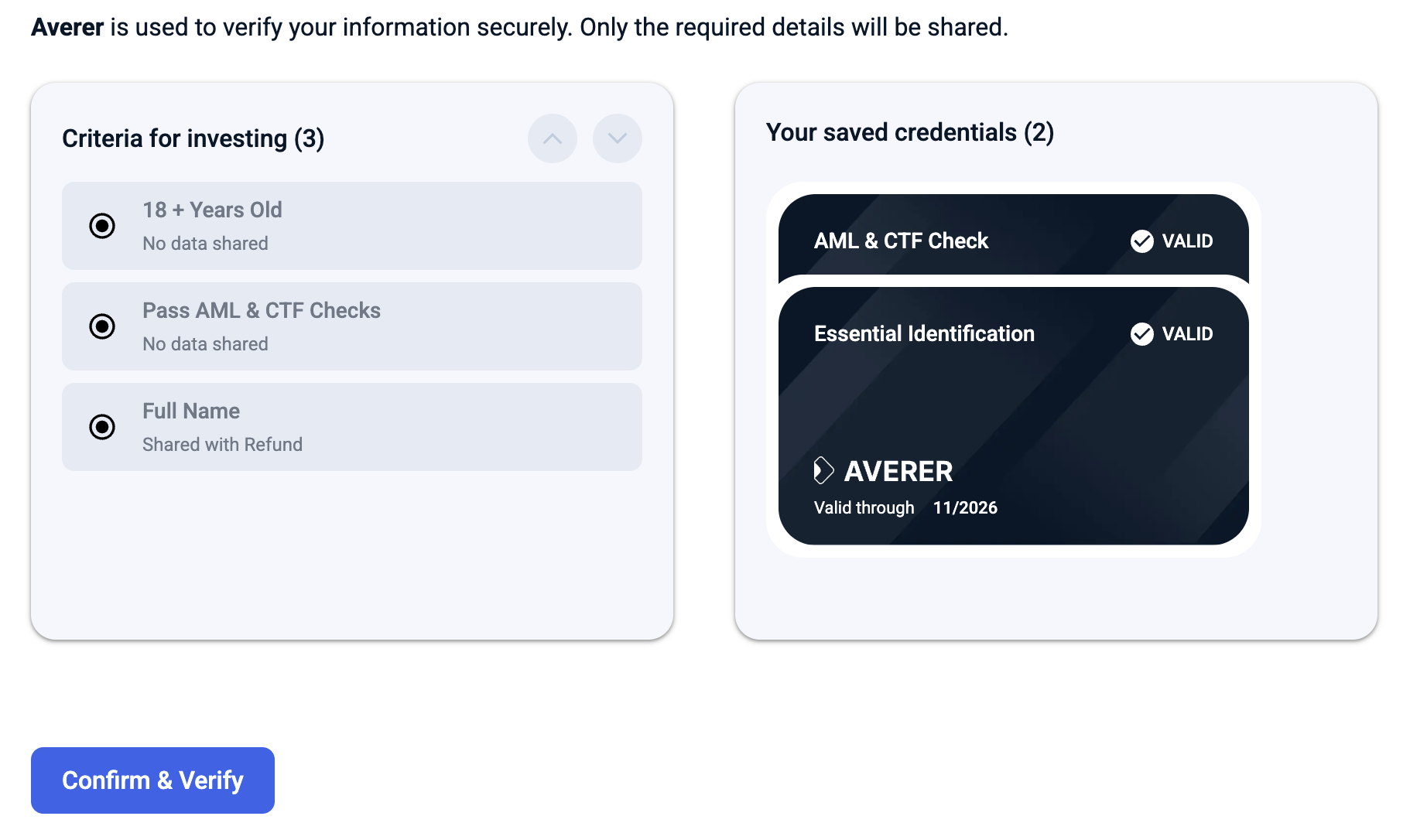
- Proof generation and submission: the SDK generates and submits proofs against your configured queries.
Individual vs Business verification
The SDK supports two verification modes, set via the mode prop:
| Individual (KYC) | Business (KYB) | |
|---|---|---|
| Mode | "individual" (default) |
"business" |
| Identity check | Personal KYC | Business entity verification |
| Typical credentials | EssentialIdCredential, PassportCredential, AMLCTFCredential, ProofOfAddressCredential | AMLCTFCredential, ProofOfIncorporationCredential, BeneficiariesCredential |
| Use case | Retail investors, individual users | Institutional investors, business entities |
See the dedicated guides for setup details:
Configuring your queries
To learn how to construct verification queries:
- Proof Methods: understand the difference between Selective Disclosure and Zero-Knowledge Proofs, and when to use off-chain vs on-chain verification
- Eligibility Criteria: schema reference, query construction, supported operators, and working examples